

In the haunting town of Jefferson, Mississippi, "A Rose for Emily" unfolds the tragic tale of Emily Grierson, a woman imprisoned by tradition and the weight of her past. Faulkner masterfully explores themes of isolation and the decay of old Southern values. As Emily clings to the remnants of her once-glorious life, the townsfolk watch, fascinated yet repulsed by her eccentricity. When her lover, Homer Barron, enters her life, it sparks hope—but the shadows of her loneliness loom larger. In a shocking finale, the discovery of Homer’s lifeless body in Emily’s home reveals the depths of her despair and the lengths she would go to for love. Faulkner's tale serves as a poignant reminder: in a world that moves on, the ghosts of the past can hold us captive, shaping our destinies in ways we often cannot escape.
Chapter 1:What Is A Rose for Emily
"A Rose for Emily" is a short story by William Faulkner that explores themes of tradition, isolation, and the complexities of social change in the American South. Here’s an evaluation based on your specified points:
1. Depth and Accuracy of Content: The story is rich in depth, exploring complex subthemes of mental illness, class struggles, and resistance to change. Faulkner's portrayal of Miss Emily Grierson is both nuanced and textured, delving into the psychological ramifications of her upbringing and societal position.
2. Originality: Faulkner's narrative employs a non-linear timeline and multiple perspectives, showcasing his unique storytelling style. The inner workings of the small-town mindset and the mysteriousness surrounding Emily's character lend a distinctive flair to the narrative.
3. Organization: The story is structured non-chronologically, but this organization adds to the suspense and intrigue. The way events are revealed gradually hooks readers, maintaining interest and encouraging deeper analysis.
4. Readability: While some may find Faulkner’s writing style dense and occasionally challenging due to its complex sentences and rich vocabulary, others appreciate the lyrical quality of his prose. The readability can vary depending on the reader’s familiarity with literary styles.
5. Inspirational Emotional Impact: The poignant and tragic elements of Miss Emily’s life evoke sympathy and provoke thought about isolation and social decay. Her darker experiences inspire reflections on human vulnerability and the consequences of societal expectations.
6. Cultural and Social Impact: The story reflects the cultural and social dynamics of the American South, particularly post-Civil War. It confronts themes of gender, class, and racial tensions, making it relevant to discussions on Southern identity and history.
7. Attention to Detail: Faulkner's meticulous attention to detail provides a vivid depiction of the setting, character motivations, and social atmosphere. Each element adds layers to Emily’s tragic story, enhancing the reader’s understanding of her plight.
8. Theme and Message: Central themes include the conflict between tradition and modernity, the role of women in society, and the effects of isolation. The message is often interpreted as a cautionary tale about the dangers of clinging to the past.
9. Critical Thinking: The story encourages critical engagement with its themes, narrative style, and symbols. Readers must piece together the story’s fragmented timeline and understand deeper societal critiques, promoting analytical skills.
10. References: Faulkner weaves in historical references to Southern culture, enhancing the authenticity of the narrative. However, some allusions may require background knowledge of the social context for full appreciation.
11. Creativity and Artistry: Faulkner's use of symbolism, especially the titular rose, and his ability to blend gothic elements with Southern realism exemplify his creativity. The artistry in his character development makes Miss Emily an iconic literary figure.
In summary, "A Rose for Emily" is a powerful work that stands out for its emotional depth, thematic richness, and artistic merit, making it a significant piece in American literature. Its complexity invites readers to engage with it on multiple levels, ensuring its enduring relevance.
Chapter 2:A Rose for Emily chapters
"A Rose for Emily" is a short story by William Faulkner that explores themes of tradition, isolation, and the passage of time in the South. The narrative is non-linear and unfolds through a series of flashbacks, revealing the life of Emily Grierson, a reclusive woman from a once-prominent family. Here’s a summary of the key chapters or sections:
Summary
Setting and Introduction:
The story opens after Emily Grierson's death, and the townspeople gather for her funeral. The narrative shifts between past and present, highlighting the decaying grandeur of her home and her psychological decline.
Emily's Background:
The story delves into Emily’s early life as a member of a prestigious family. Her father, who was overprotective and controlling, drove away potential suitors, leaving Emily alone and increasingly isolated after his death. When her father died, Emily denied his passing for three days, indicating her inability to let go.
Isolation and Taxes:
An important moment in the story occurs when the town officials confront Emily about her taxes. She refuses to pay, claiming that she had an agreement with the late Mayor. Throughout the narrative, the town’s changing social dynamics reflect Emily's static existence.
The Suitor:
Emily later becomes involved with Homer Barron, a Northern laborer who comes to town for a construction project. Their relationship is scandalous in the eyes of the townspeople, but for Emily, it represents a chance at happiness. However, Homer does not signify a stable future, which deepens Emily’s anxiety about losing him.
Emily's Desperation:
As the story develops, Emily's desperation becomes palpable when she buys arsenic, leading the townspeople to suspect suicide. They worry about her potential plan to keep Homer, but the truth remains ambiguous.
Climactic Moments:
The story reveals that Emily eventually drives Homer away but does not give up on him. Instead, she engages in a macabre act, which culminates in her taking his life and keeping his corpse in her home, a final act of control over her solitary existence.
Conclusion:
After Emily's death, the townsfolk discover the grim reality of her life. In a haunting conclusion, they find Homer’s corpse in a bedroom along with a strand of Emily's hair on the pillow beside him, symbolizing her tragic inability to let go even in death.
Themes:
- Isolation vs. Community: Emily's relationship with the townspeople reflects her profound isolation despite being surrounded by a community that constantly scrutinizes her.
- Tradition vs. Change: The story showcases the tension between the old Southern traditions that Emily clings to and the new realities the townspeople represent.
- Death and Mourning: Emily's inability to confront death, both of her father and Homer, plays a central role in her tragic life.
Faulkner's narrative style, rich with symbolism and complex time shifts, emphasizes the intricate layers of Emily's character and the societal pressures that shape her fate.
The Last Rose in the Dusty Town: An Exploration of Isolation and Change in "A Rose for Emily"
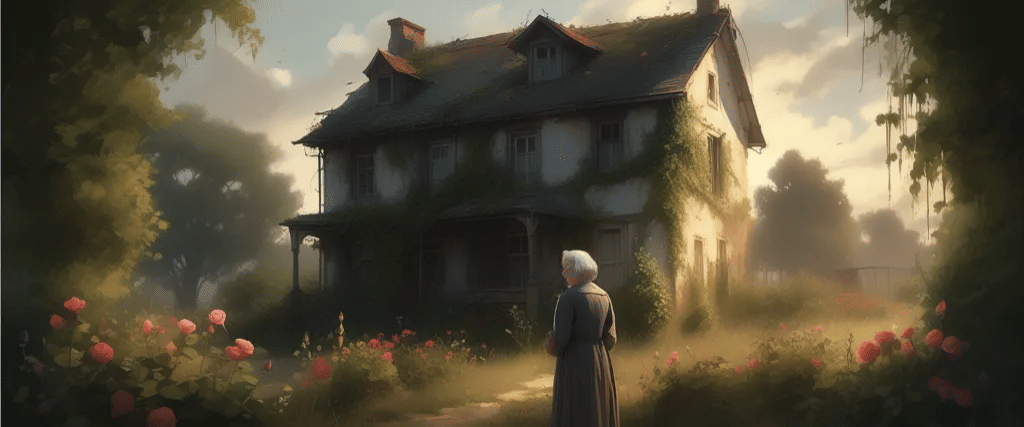
In the quiet, forgotten town of Jefferson, Mississippi, there stood a house that whispered stories of a bygone era. Its paint, once vibrant, had faded to a sullen gray, much like the life of its last inhabitant, Miss Emily Grierson. Through the lens of her tragic existence, William Faulkner’s short story, "A Rose for Emily," serves as a poignant exploration of themes like isolation, decay, and the resistance to change.
Picture this: the late afternoon sun casts long shadows through the trees lining the narrow streets of Jefferson, illuminating the faded grandeur of Miss Emily's home. This once stately structure, now a monument to her solitude, stands as a testament to both her wealth and her profound isolation. Emily, the daughter of a once-prominent family, has become a recluse, shrouded in mystery and the town’s whispered gossip. Her life—a tapestry woven from threads of tradition and loss—cries out to be understood.
In the heart of Jefferson, the townsfolk regard Emily with a curious mixture of sympathy and disdain. For years, they had watched her retreat deeper into her sorrowful existence, her isolation becoming a symbol of the past they both romanticized and resented. Faulkner masterfully captures this duality of human nature—the desire to connect and the instinct to alienate—as he portrays a world in transition, one that Emily steadfastly refuses to embrace.
The theme of isolation in "A Rose for Emily" is palpable, manifesting not only in Emily’s physical seclusion but also in her emotional landscape. The townspeople, though ever-present, are mere shadows in her life, offering her a peculiar brand of companionship that doesn't require true engagement. Emily’s loneliness reaches its zenith when she takes drastic measures to keep the fleeting moments of love and connection alive. Her relationship with Homer Barron, a Northern laborer, ignites a flicker of hope in her isolated heart, but it ultimately leads her down a dark path—a desperate act to stave off abandonment and decay.
As time marches on, Jefferson mirrors Emily's decline. The old South, once flourishing with social customs and rigid hierarchies, grapples with the relentless advance of modernization. Emily becomes an anachronistic figure, caught between the traditions of her upbringing and the changing societal landscape. Faulkner draws attention to how Emily's refusal to adapt symbolizes a broader resistance to change—not only within her but also in the culture of the South itself. Her tragic fate serves as a warning of the dangers inherent in clinging too tightly to the past.
In the final haunting moments of the story, when the townsfolk discover the grim truth hidden within Emily's home, readers are left to ponder the price of isolation and the limitations of love. The rose—a symbol of beauty and a form of homage to Emily’s tragic struggle—emerges as both a gift and a curse. It signifies the fragility of life and the inevitable decay that follows, yet it also embodies the humanity that resists abandonment.
Ultimately, "A Rose for Emily" is a masterclass in storytelling, revealing the complexities of human emotion and the stark realities of change. Through the tragic arc of Emily Grierson, Faulkner compels us to confront our own relationships with isolation and the past. Are we, too, like Emily, clinging to old wounds and fading memories, or can we find the courage to embrace the ever-unfolding journey of life? As we reflect on Emily's story, may we be inspired to cultivate our own roses—one that flourishes amid the thorns of our own experiences, drawing us closer to each other in this ever-evolving tapestry of existence.

Book Summary Audio Bookey https://www.bookey.app/audiobook/a-rose-for-emily
Quotes https://www.bookey.app/book/a-rose-for-emily/quote
YouTube https://www.youtube.com/watch?v=UI_25Pxzwc4
Amazon https://www.amazon.com/Rose-Emily-William-Faulkner/dp/B09GJG6JMF
Goodreads https://www.goodreads.com/book/show/2984286-a-rose-for-emily