
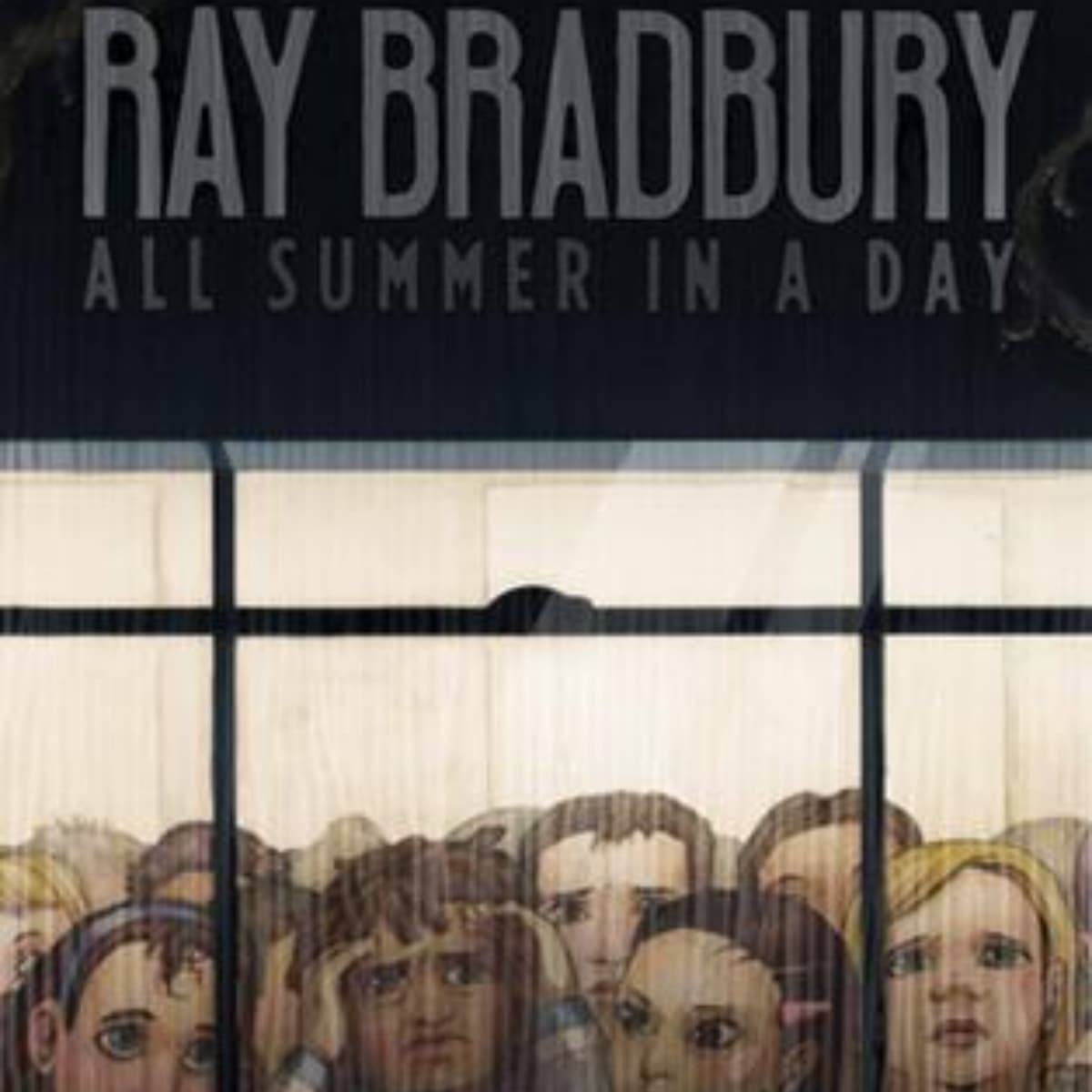
In Ray Bradbury's poignant tale, "All Summer in a Day," we are transported to a distant colonized Venus, where sunlight is a rare gem, appearing only once every seven years. Among the children, Margot, who remembers Earth’s golden warmth, longs for the sun with an intensity that sets her apart. This deep yearning makes her a target for teasing and isolation by her classmates, who cannot share her memories.
As the long-awaited day of sunlight arrives, the children, swept up in excitement, make a cruel decision. They lock Margot in a closet, denying her the joy she so desperately craves. When they finally release her, they find the sun has vanished, leaving Margot in darkness. This story reflects themes of empathy, the profound impact of bullying, and the bittersweet nature of memories, reminding us that true understanding often lies beyond mere experience. The sun may shine fleetingly, but the shadows of our actions can linger far longer.
Chapter 1:What Is All Summer in A Day
"All Summer in a Day" is a short story by Ray Bradbury, first published in 1954. It is set on Venus, where the climate is perpetually rainy, and the sun only shines for a brief period every seven years. The narrative focuses on a group of children who live in this dreary environment and the inclusion of a girl named Margot, who remembers the sun from her time on Earth. The story explores themes of isolation, bullying, and the fleeting nature of happiness.
Here’s a brief evaluation based on the specified points:
1. Depth and Accuracy of Content: The story presents a vivid portrayal of a dystopian environment, marrying imaginative science fiction with emotional depth. While not scientifically detailed, it accurately reflects children's psychological responses to environmental conditions.
2. Originality: Bradbury’s concept of a world where sunlight is a rare phenomenon is both original and exceptionally evocative. The story differentiates itself through its unique setting and exploration of children's perspectives and emotions.
3. Organization: The narrative is well-structured, with a clear beginning, middle, and end that build tension and lead to an impactful climax. The progression of the plot is efficient, allowing the emotional weight to develop naturally.
4. Readability: Bradbury’s language is accessible yet poetic, making the story engaging for readers across various age groups. The descriptive passages effectively draw readers into the bleak Venusian setting.
5. Inspirational Emotional Impact: The poignant themes of loneliness, longing, and the cruelty of childhood bullying inspire deep emotional responses. The story encourages reflection on empathy and the importance of kindness.
6. Cultural and Social Impact: The tale touches on issues of conformity, jealousy, and the consequences of exclusion, resonating with universal human experiences. It highlights the importance of compassion in human interactions.
7. Attention to Detail: Bradbury employs rich imagery and sensory details to vividly evoke the dreariness of Venus and the contrasting joy of the sun, enhancing the story's emotional resonance.
8. Theme and Message: Central themes include the nature of happiness, the pain of isolation, and the consequences of cruelty. The story poses critical questions about empathy and societal treatment of those who are different.
9. Critical Thinking: The narrative invites readers to contemplate and discuss significant issues such as bullying, the human experience of suffering, and the value we place on joy and beauty. It promotes critical engagement with these themes.
10. References: While the story does not reference specific external texts, its allusions to childhood experiences and the concept of sunlight as a metaphor for hope lend it a timeless quality that draws from universal human truths.
11. Creativity and Artistry: Bradbury’s imaginative world-building combined with lyrical prose showcases his artistic prowess, making "All Summer in a Day" a compelling narrative that is reflective of both science fiction and poignant human emotion.
Overall, "All Summer in a Day" is considered a classic, demonstrating many qualities that contribute to its lasting significance in literature. It effectively combines emotional depth, social commentary, and poetic artistry, making it a powerful and thought-provoking read.

Chapter 2:All Summer in A Day chapters
"All Summer in a Day" is a short story by Ray Bradbury rather than a novel with chapters. It revolves around a group of children living on Venus, where it rains continuously and the sun only comes out for a brief period every seven years. Here’s a summary of the story:
Summary:
The story is set in a future where humanity has colonized Venus, a planet characterized by its perpetual rain and grey skies. The main character, Margot, is a young girl who remembers the sun from her early childhood on Earth. She longs for the warmth and brightness of the sun, making her different from her classmates, who have never experienced it.
Margot is bullied by her peers for her memories and her differences. On the day when the sun is predicted to appear, excitement fills the classroom as the children look forward to the long-awaited moment. However, in a moment of cruelty, the other children lock Margot in a closet just before the sun comes out.
As the sun shines brightly for the first time in seven years, the children revel in the beauty and warmth, playing outside joyfully. They forget about Margot, who is trapped inside and misses the glorious experience.
Once the sun disappears and the rain returns, the children realize their cruel act. They feel guilt and regret for what they have done, as they remember Margot's longing for the sun and how they deprived her of the joy that the brightness brought.
The story explores themes of jealousy, bullying, and the value of empathy, highlighting the emotional pain of being different and the consequences of collective cruelty.
If you have any specific questions or need further details about certain aspects of the story, feel free to ask!
The Sun That Was Never Seen: A Journey Through Ray Bradbury’s “All Summer in a Day”
Once upon a time, in a distant future where Earth had become a distant memory, there lay a planet called Venus. This was no ordinary place; it was shrouded in relentless rain and thick, oppressive clouds, where the sun seldom made an appearance. And yet, amidst the monotony of gray and the constant sound of drops tapping against the ground, hope flickered like a flame in the hearts of the children who lived there.
Among them was Margot, a girl who had been born on Earth, where the sun bathed the land in warmth and light, painting vibrant hues across the sky. Her memories of golden days, the feel of sun-warmed grass beneath bare feet, and the joy of laughter ringing through the air were a stark contrast to the perpetual gloom of Venus. While her classmates had grown up knowing only rain, Margot clung to her dreams of a day when the clouds would part and the sun would finally grace their world.
The tale unfolds in a classroom, where Margot’s peers listen, wide-eyed and incredulous, as she describes the sun. Her words are like an artist's brush, painting vivid pictures of brightness and warmth that leave her classmates both envious and frustrated. To them, Margot’s memories feel like stories spun from the threads of fantasy—completely alien to their lived experiences. The sun she speaks of is not merely a celestial body; it symbolizes everything they yearn for, and yet cannot grasp.
The theme of All Summer in a Day resonates deeply as the essence of isolation and longing permeates the narrative. Margot, with her vivid memories and unyielding hope, represents the struggle of the individual against the collective. She is an outsider among her peers; although physically present, emotionally, she is worlds apart. This dichotomy illustrates how easily the familiar can become foreign, especially in the face of ridicule and misunderstanding.
As the fateful day approaches when the sun is predicted to break through the clouds—an event so rare it has the potential to transform their lives—the tension within the story rises. Margot's classmates, driven by envy and the need to conform, make a fateful choice. In a moment of cruelty, they bully Margot, locking her in a closet as they rush outside to experience the sun for themselves. The temporary thrill of basking in sunlight becomes overshadowed by a haunting realization; they have deprived someone of their dream.
Bradbury's masterful storytelling weaves a haunting tapestry that delves into themes of empathy, jealousy, and the consequences of exclusion. It forces readers to confront uncomfortable truths about their own behavior and the impact it has on others. We see the consequences of Margot’s isolation manifest in the fleeting joy of her classmates—the brief kiss of sunlight on their skin quickly turns to a chilling regret when they realize the depth of their actions.
As the clouds roll in once more, Margot emerges from her prison only to find the sun has disappeared, leaving her once again enveloped in darkness. In that moment, the narrative transcends the confines of a simple children’s tale. It becomes a poignant reminder of the beauty and power of empathy, the importance of nurturing our differences, and the weight of longing that can bind us together or tear us apart.
Ultimately, Bradbury’s All Summer in a Day serves as a cautionary tale for our world—a world where the sun shines bright but is often obscured by our actions and attitudes. It asks us to reflect on how we treat those who dare to dream differently and compels us to ensure that the sun—both literal and metaphorical—shines for everyone, not just a chosen few. In embracing Margot’s story, we too are invited to step into the light, armed with the understanding that the warmth of compassion can break through even the darkest clouds.
And so, the next time we encounter someone who sees the world through a lens of hopeful curiosity, let us remember Margot and the sun she longed for. For in nurturing those dreams, we might just find the warmth we too have been searching for all along.

Book Summary Audio Boookey https://www.bookey.app/audiobook/all-summer-in-a-day
YouTube https://www.youtube.com/watch?v=qmm1TAy55B4
Amazon https://www.amazon.com/All-Summer-Day-Short-Story-ebook/dp/B0BF5C7DXL
Goodreads https://www.goodreads.com/book/show/45306054-all-summer-in-a-day