
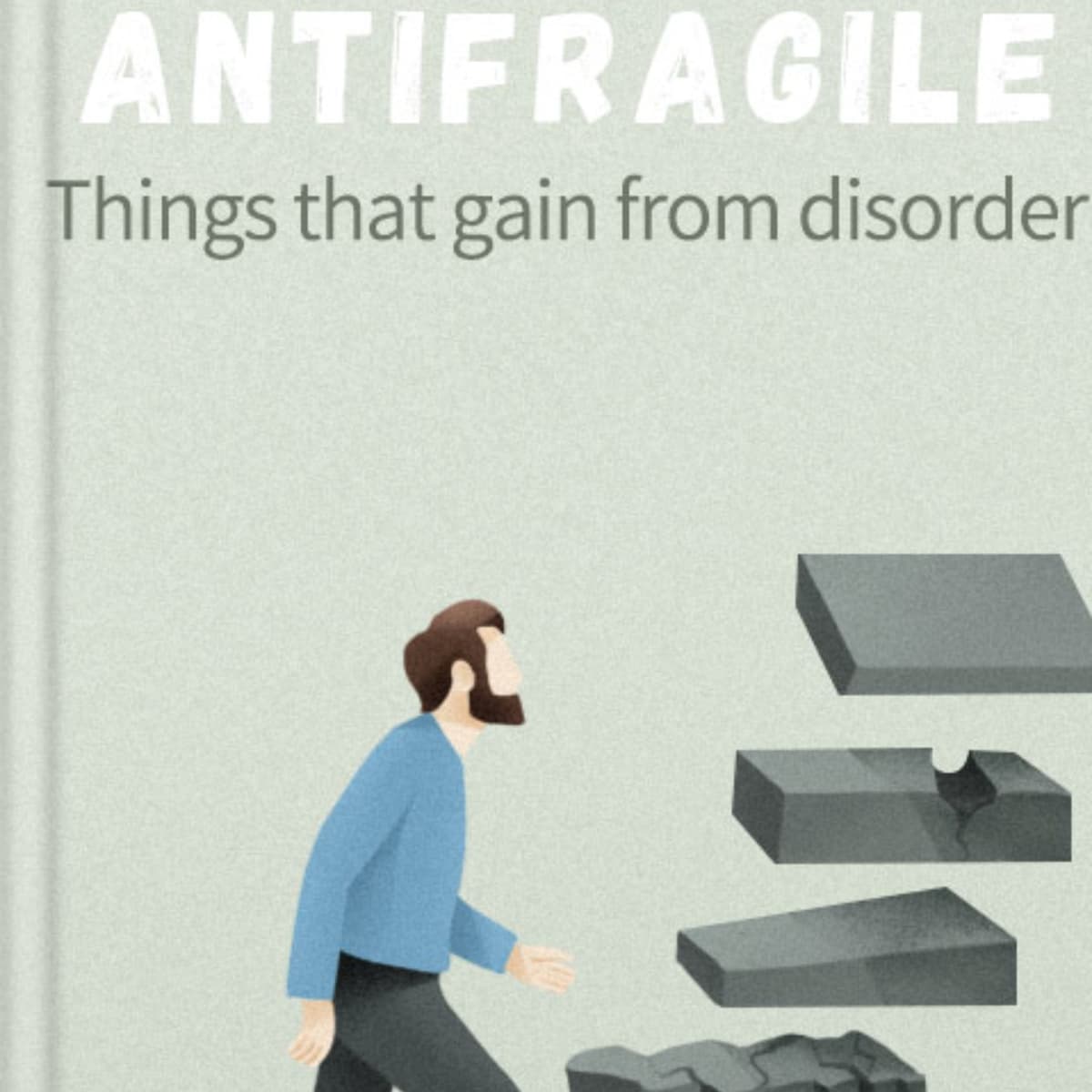
In a world brimming with uncertainty, Nassim Nicholas Taleb’s Antifragile introduces a captivating idea: some things thrive in chaos. Imagine a towering oak tree, its roots growing deeper in storms, or a seasoned boxer who learns and adapts with every punch. Taleb argues that instead of fearing unpredictability, we should embrace it, allowing ourselves to become "antifragile." This resilience is rooted in three key principles: the benefits of randomness, the importance of decentralization, and the power of optionality. By adopting an antifragile mindset, we transform setbacks into stepping stones, turning adversity into strength. In life’s unpredictable journey, nurturing antifragility empowers us to not just survive, but to flourish amidst the unknown, harnessing chaos as a catalyst for growth.
Chapter 1:What Is Antifragile
What Is Antifragile?
"Antifragile: Things That Gain from Disorder" is a book by Nassim Nicholas Taleb, published in 2012. It introduces the concept of antifragility, which is the quality of systems, ideas, or entities that actually benefit from volatility, stress, or chaos. Unlike fragile systems, which break under pressure, or robust systems, which resist change, antifragile systems thrive and grow stronger when exposed to uncertainty and upheaval.
Evaluation of "Antifragile" by Nassim Nicholas Taleb
1. Depth and Accuracy of Content:
- The book is rich in philosophical and practical insights. Taleb draws on a variety of fields including economics, statistics, and philosophy. His arguments are supported by examples from real life, though some critics argue about the accuracy of his interpretations.
2. Originality:
- Taleb's concept of antifragility is a fresh take on risk management, deviating from traditional notions of robustness and resilience. His unique perspective has spurred discussion in multiple disciplines.
3. Organization:
- The structure can be seen as unconventional. The book is divided into multiple sections that interweave anecdotal narratives, philosophical musings, and theoretical discussions, which may challenge some readers seeking a linear progression.
4. Readability:
- The prose is engaging, often informal and conversational. However, some may find it dense or challenging due to Taleb’s use of specialized terminology and his digressions into various topics.
5. Inspirational Emotional Impact:
- Taleb's ideas provoke thought and encourage readers to embrace uncertainty as a pathway to growth. Many find his perspective empowering, fostering a sense of resilience in the face of life's unpredictability.
6. Cultural and Social Impact:
- The book has had a significant influence in business, finance, and self-help communities. The term "antifragile" has entered popular discourse, affecting how people think about risk and uncertainty.
7. Attention to Detail:
- Taleb is meticulous in his examples and reasoning, though some readers criticize him for being overly selective or anecdotal. His attention to detail can be double-edged; it supports his points while sometimes leading to convoluted arguments.
8. Theme and Message:
- The central theme revolves around embracing and leveraging uncertainty to cultivate resilience and success. The message encourages readers to rethink their relationship with risk and disorder.
9. Critical Thinking:
- The book stimulates critical thinking by challenging conventional wisdom about uncertainty and risk management. However, some critics suggest that the book lacks rigorous empirical data in places.
10. References:
- Taleb draws on a wide array of references, including historical examples, anecdotes, and diverse fields. However, some scholars argue that references could be deeper and more varied.
11. Creativity and Artistry:
- Taleb's writing style incorporates literary flair. He often uses humor and metaphors effectively, making complex ideas more relatable. His ability to weave storytelling into philosophy adds to the book's creativity.
Conclusion
Overall, "Antifragile" is a thought-provoking book that challenges readers to reconsider their approach to uncertainty and resilience. While it has garnered praise for its originality, depth, and emotional resonance, some readers may find its structure and density a barrier. Nonetheless, it has made a lasting impact on cultural conversations surrounding risk and adaptability.

Chapter 2:Antifragile chapters
"Antifragile: Things That Gain from Disorder" by Nassim Nicholas Taleb explores the concept of antifragility, which refers to systems or entities that benefit from uncertainty, volatility, and disorder. Below is a brief summary of the main themes and ideas presented in the book, broken down by the major sections rather than specific chapters:
Part 1: The Antifragile
- Definition of Antifragility: Taleb introduces the concept of antifragility, distinguishing it from fragility (which breaks under stress) and robustness (which withstands stress). Antifragile systems thrive and grow when exposed to shocks and randomness.
- Examples in Life: Taleb uses various examples, including biological systems, business, and personal growth, to illustrate how stressors and challenges can lead to improvement and strength.
Part 2: Modernity and Fragility
- Impact of Modern Society: He discusses how modern civilization has become fragile due to overreliance on technology and the centralized systems that dominate contemporary life, leading people away from antifragility.
- Complex Systems: Taleb explains that many complex systems (e.g., economies, governments) are prone to catastrophic failures because they are built on fragile foundations.
Part 3: The Triad
- Fragile, Robust, Antifragile: He introduces the Triad framework, categorizing entities into three types: fragile (will break), robust (will resist), and antifragile (will improve).
- Practical Applications: Taleb provides insights on how to design and select systems, businesses, and strategies that are antifragile.
Part 4: The Ethics of Antifragility
- Skin in the Game: The idea that decision-makers should bear a portion of the consequences of their actions is introduced. He argues that having "skin in the game" leads to more responsible decision-making and can enhance antifragility.
- Responsibility and Accountability: Taleb emphasizes that modern systems often lack accountability, which makes them more fragile.
Part 5: The Antifragile Mindset
- Personal Growth: Taleb advocates for embracing challenges and uncertainties as a means to grow and become stronger. He encourages readers to cultivate a mindset that seeks opportunities in adversity.
- Barbell Strategy: He introduces the "barbell strategy" in investment and life, suggesting individuals should balance risk by combining safe, conservative options with high-risk, high-reward strategies.
Conclusion: Embracing Uncertainty
- Learning from Failure: In the conclusion, Taleb reinforces the necessity of embracing uncertainty and learning from failure to foster antifragility.
- Real-world Applications: He provides practical advice on how individuals and organizations can apply the principles of antifragility to navigate complex and unpredictable environments.
Throughout "Antifragile," Taleb combines philosophy, economics, and personal narrative to illustrate his points, making the case for a new way of thinking about risk, uncertainty, and resilience in the modern world. The book emphasizes the importance of adapting to challenges and redesigning our systems for a future that will inevitably be marked by unpredictability.
Once upon a time, in a bustling marketplace in the ancient city of Byzantium, there lived a wise old merchant named Aelis. Aelis was not just any merchant; he had a remarkable talent for navigating the unpredictable tides of fortune. Traders and travelers alike would seek his counsel, for he possessed a unique understanding of risk and uncertainty.
One sunlit afternoon, as the aroma of exotic spices wafted through the air, a young apprentice named Leo approached Aelis with a furrowed brow. "Master Aelis," he began, "I hear tales of grand empires rising and falling, fortunes being made and lost overnight. How can one thrive amidst such chaos? How can I protect my future against misfortune?"
Aelis, his eyes twinkling with wisdom, beckoned Leo closer. "Ah, dear apprentice, to survive and perhaps even thrive in this world, one must grasp the essence of what I call ‘antifragility.’ A concept that transcends mere resilience.”
With that, Aelis began to weave a story, rich with analogy and insight. “Imagine a delicate crystal vase, fragile and beautiful. When knocked, it shatters into a myriad of pieces, a symbol of vulnerability. Now picture a sturdy oak tree, steadfast against harsh winds. It bends but does not break, demonstrating resilience—an admirable quality, yet ultimately passive. But let me introduce you to a third entity: the phoenix, which rises anew from its ashes. This, my young friend, embodies antifragility.”
Leo pondered the images in his mind. “Is it then the ability to bounce back, Master?”
“Not quite, Leo. Think of antifragility as an opportunity in adversity. It’s a state where challenges, chaos, and stressors enhance strength, growth, and innovation rather than merely testing it. For example, when facing storms, the phoenix emerges from adversity stronger, reborn through the flames of hardship.”
Intrigued, Leo leaned in as Aelis continued. “In the world of trade, consider the bustling market we stand in. Each challenge a trader faces—the unpredictable whims of customers, the sudden arrival of a rival merchant—can either lead to defeat or transformation. An antifragile merchant learns to adapt, to innovate in the face of unpredictability. They experiment, they fail, and through their failures, they grow wiser and more equipped for future storms.”
“But what about certainty?” Leo asked hesitantly. “Aren’t we all yearning for stability in our lives?”
A chuckle erupted from Aelis, infectious and light. “Ah! The sweet illusion of control! Many chase after certainty, believing it will shield them from harm. But in truth, the world is a sea of uncertainty, and those who cling too tightly to that illusion often find themselves adrift when the tides turn. It’s the antifragile who embrace uncertainty, leveraging it as a strength. They anticipate disruptions and prepare to pivot. Because, Leo, in every crisis lies the seed of opportunity.”
As the sun dipped low in the sky, painting the evening in hues of gold and crimson, Aelis and Leo strolled through the market. They paused before a stall selling various spices. “Observe those who run this stall,” Aelis said, pointing. “When demand surged, they experimented with combinations, creating a new, fascinating blend that drew customers in. Their willingness to embrace the chaotic, unpredictable nature of the marketplace led to innovation and growth.”
“I see now,” replied Leo, his eyes reflecting the flickers of understanding. “Antifragility isn’t just about enduring the storm but dancing in the rain, allowing uncertainties to propel us into new realms of possibility.”
As they rounded the corner, Leo felt a renewed sense of purpose unfurling inside him. “Thank you, Master Aelis. I shall carry this lesson close to my heart.”
And with that, Aelis, the old merchant, smiled knowingly, for he knew that the journey towards antifragility was a life-long endeavor, filled with both trials and triumphs, inviting Leo—and all who dared to embrace uncertainty—to find not just strength but the courage to transform in the face of chaos.
As night blanketed Byzantium, the old merchant and his apprentice became but a part of the city’s ever-shifting narrative—a testament to the power of antifragility, poised to thrive against the currents of fate.

Book Summary Audio Bookey https://www.bookey.app/audiobook/antifragile
Quotes https://www.bookey.app/book/antifragile/quote
YouTube https://www.youtube.com/watch?v=6kVgIfMMeWM
Amazon https://www.amazon.com/Antifragile-Things-That-Disorder-Incerto/dp/0812979680
Goodreads https://www.goodreads.com/book/show/13530973-antifragile