
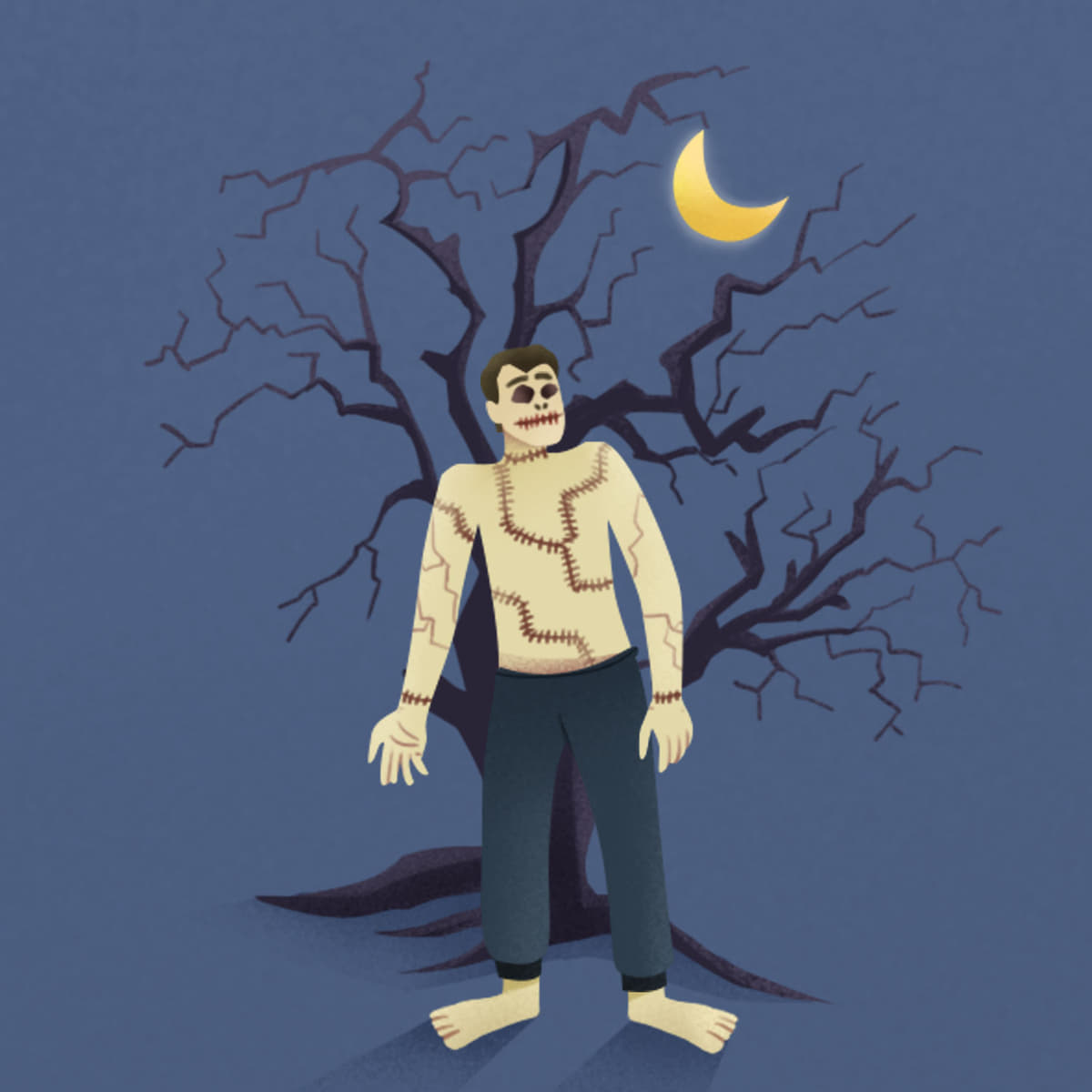
Frankenstein book summary
Frankenstein is a novel by Mary Shelley that tells the story of Victor Frankenstein, a young scientist who creates a creature by piecing together various body parts. However, upon completing his creation, Victor is horrified by the monster he has brought to life. The monster is abandoned by its creator and left to navigate the world on its own.
The novel explores themes of humanity, science, morality, and the consequences of playing god. The creature, rejected by society, seeks revenge against its creator and those who have wronged him. Driven by loneliness and despair, the monster kills Victor's loved ones, leading Victor to become determined to destroy it.
Through a series of letters and narratives, the story unravels the complexities of Victor's journey and the consequences of his actions. The novel raises questions about the nature of life, the responsibilities of creators towards their creations, and the consequences of ambition and obsession.
Ultimately, Frankenstein is a cautionary tale about the dangers of playing with the forces of nature and the potential consequences of unchecked scientific progress. It delves into the moral implications of creation and the repercussions of abandoning one's responsibilities.
Quotes of Frankenstein book
- "I will pioneer a new way, explore unknown powers, and unfold to the world the deepest mysteries of creation." - Victor Frankenstein
- "I collected bones from charnel houses and disturbed, with profane fingers, the terrific secrets of the human frame." - Victor Frankenstein
- "Did I request thee, Maker, from my clay, to mould me man? Did I solicit thee from darkness to promote me?" - The Monster
- "I ought to be thy Adam; but I am rather the fallen angel." - The Monster
- "Beware; for I am fearless, and therefore powerful." - The Monster
- "The companions of our childhood always possess a certain power over our minds which hardly any later friend can obtain." - Victor Frankenstein
- "If I cannot inspire love, I will cause fear!" - The Monster
- "The tortures of hell are too mild a vengeance for your crimes." - The Monster
- "Independence is glorious; but I thought that liberty alone is inadequate to produce happiness." - Victor Frankenstein
- "I have love in me the likes of which you can scarcely imagine and rage the likes of which you would not believe." - The Monster
What were Mary Shelley's political beliefs?
Mary Shelley's political beliefs were strongly influenced by her parents, Mary Wollstonecraft and William Godwin, who were prominent figures in the radical Enlightenment movement. She was raised in an intellectual and politically progressive environment, which influenced her own views.
Shelley held liberal and radical beliefs, advocating for social equality and justice. She was a critic of hierarchies and oppression, and her writings often contained social and political commentary. Shelley was critical of the existing power structures, specifically monarchy and aristocracy, and believed in the potential of individuals to overcome societal constraints.
Furthermore, Shelley's novel, "Frankenstein," can be seen as a critique of the dangers of unrestrained scientific progress and the potential misuse of power. The novel explores themes of responsibility, ethics, and social justice, reflecting Shelley's concerns about the impact of unchecked technological advancements on society.
In summary, Mary Shelley's political beliefs were shaped by her upbringing in a politically radical environment and can be described as liberal, advocating for social equality, justice, and criticizing existing power structures.