
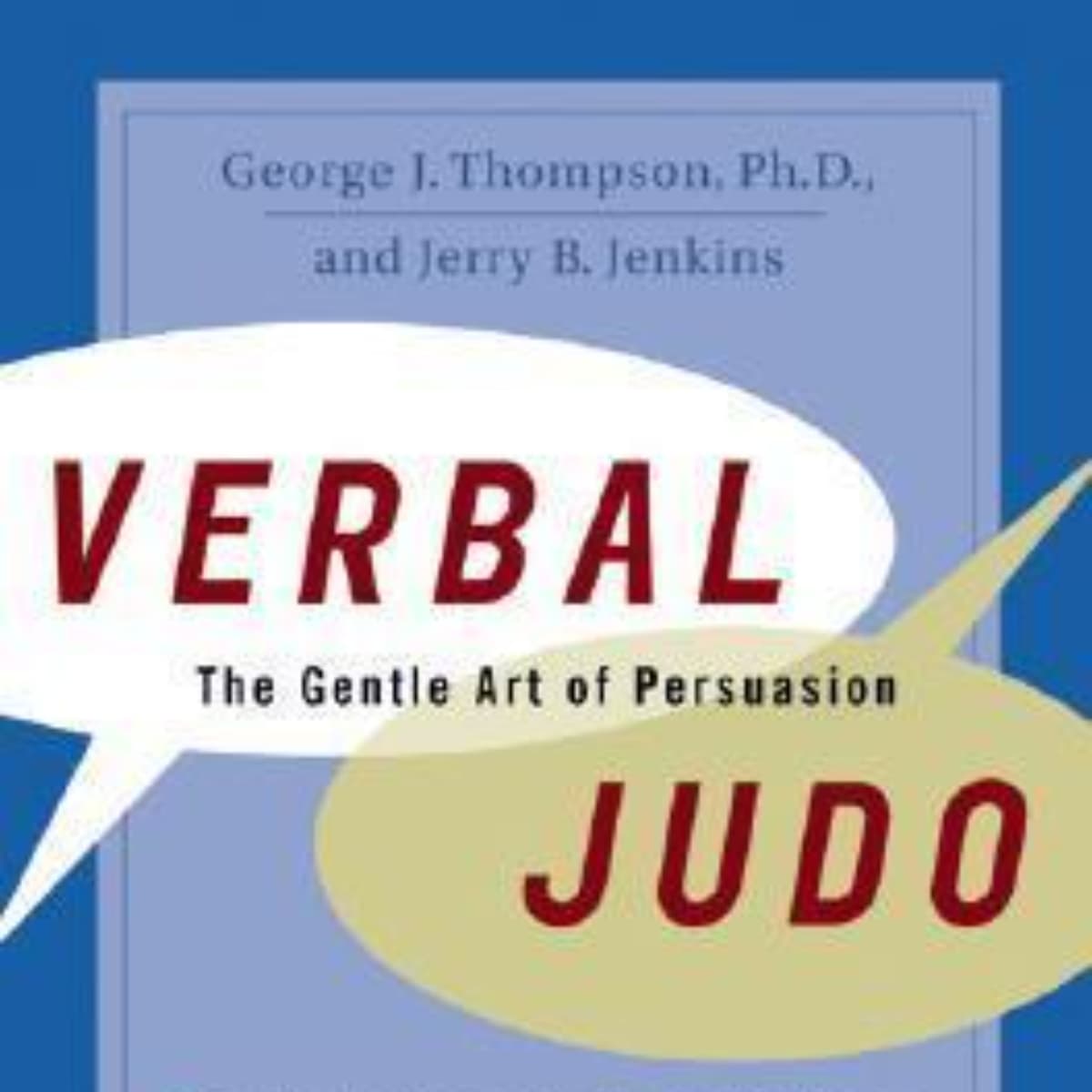
In a world bustling with conflict and miscommunication, George J. Thompson's "Verbal Judo" emerges as a guiding light. Imagine standing on the brink of an argument when suddenly, you recall a powerful technique. Thompson teaches us that words, like judo moves, can redirect the energy of confrontation into cooperation. By employing empathy and strategic language, we can transform potential chaos into understanding. Picture a heated exchange diffused by a simple reframing of words—turning a "You’re wrong!" into an opening: "Let’s explore this together." Through engaging anecdotes and practical exercises, Thompson empowers readers to master the art of communication, encouraging them to listen actively and respond thoughtfully. Ultimately, "Verbal Judo" is not just about winning arguments; it’s about fostering connections and building bridges through the eloquence of language. With every encounter, we have the power to wield our words with precision and grace.
Chapter 1:What Is Verbal Judo
Verbal Judo is a communication technique developed by George J. Thompson that emphasizes the use of verbal skills to de-escalate conflicts and improve interpersonal interactions. It blends psychology and communication strategies to influence people positively and effectively.
Evaluation of "Verbal Judo" by George J. Thompson
1. Depth and Accuracy of Content:
- The book offers a deep dive into the principles of effective communication, particularly in high-stress situations such as law enforcement. The techniques are supported by real-life examples, demonstrating accuracy in application.
2. Originality:
- While conflict resolution and communication strategies are not new concepts, Thompson’s approach to framing these techniques as "Verbal Judo" is unique. It provides a fresh perspective by borrowing from martial arts metaphors.
3. Organization:
- The book is well-structured, guiding readers through the principles and applications of verbal techniques in a logical manner. Each chapter builds on previous concepts, making it accessible even for those unfamiliar with similar topics.
4. Readability:
- Thompson's writing is clear and direct, making complex ideas understandable. The conversational tone enhances readability and engages a wide audience.
5. Inspirational Emotional Impact:
- The book aims to inspire confidence in using verbal skills to manage conflicts. Readers may feel motivated to improve their communication skills and approach conflicts with a new mindset.
6. Cultural and Social Impact:
- "Verbal Judo" has impacted various fields, particularly law enforcement and customer service, by promoting constructive communication. It addresses social issues around conflict and highlights the importance of understanding diverse perspectives.
7. Attention to Detail:
- Thompson meticulously details each verbal technique, providing step-by-step guidance that emphasizes nuance and strategy in communication.
8. Theme and Message:
- The core message revolves around respect and understanding in communication. Thompson advocates for empathy and the importance of seeing situations from the other person's perspective to de-escalate conflicts effectively.
9. Critical Thinking:
- The book encourages readers to think critically about their communication styles and the impact of their words. Readers are prompted to reflect on their interpersonal interactions and consider alternative approaches.
10. References:
- While the book is grounded in Thompson’s experiences and insights, it may benefit from more extensive references to academic sources or studies on communication and conflict resolution.
11. Creativity and Artistry:
- The metaphor of "Verbal Judo" is a creative way to conceptualize communication. Thompson’s storytelling ability adds artistry to the instruction, making it engaging and memorable.
Summary
Overall, "Verbal Judo" is a well-regarded book that combines practical communication strategies with psychological insight. It excels in organization, readability, and emotional impact, making it a worthwhile read for anyone interested in improving their interpersonal skills. Its original approach to communication as a form of martial art makes it stand out in the genre, despite some limitations in academic referencing.

Chapter 2:Verbal Judo chapters
"Verbal Judo: The Gentle Art of Persuasion," written by George J. Thompson, is a guide to effective communication, particularly in high-stress situations. Below is a brief summary of the key concepts typically covered in the chapters:
Chapter Summaries:
1. Introduction to Verbal Judo:
- Introduces the concept of "Verbal Judo," emphasizing the importance of communication in resolving conflict and de-escalating potentially volatile situations. The goal is to redirect the energy of confrontation into a productive dialogue.
2. The Basics of Communication:
- Discusses the components of effective communication, including verbal and non-verbal elements. The chapter highlights how tone, body language, and empathy can significantly influence interactions.
3. The Five Universal Truths of Human Interaction:
- Presents five truths that underpin human behavior, including the need to feel respected, the importance of being part of a solution, and the impact of emotions in communication.
4. The Importance of Tactical Communication:
- Details how to use verbal techniques to gain compliance and cooperation, stressing the necessity to listen actively and to understand the other person's perspective.
5. The Art of De-escalation:
- Provides strategies for calming intense situations and transforming anger into cooperation. Techniques like asking questions and validating feelings are explored.
6. The Power of Choices:
- Discusses how presenting choices can empower individuals and lead to better outcomes, illustrating the concept of redirecting conflict into a cooperative dialogue.
7. The Impact of Empathy:
- Examines the role of empathy in communication, emphasizing the need for understanding and acknowledging the emotions and perspectives of others.
8. The Techniques of Verbal Judo:
- Offers practical techniques for handling difficult conversations, including the use of "paraphrasing," "summarizing," and "reflecting" to demonstrate understanding and control.
9. Building Relationships through Communication:
- Focuses on the importance of building rapport and trust, vital elements for effective communication and conflict resolution.
10. Practice and Application:
- Encourages readers to practice the principles of verbal judo in their daily lives and provides exercises to enhance one’s communication skill set.
Conclusion:
- Summarizes the key takeaways from the book, reinforcing that effective communication is a skill that can be developed through practice. The ultimate goal of verbal judo is not just to persuade or control, but to foster understanding and collaboration.
Overall, "Verbal Judo" serves as a valuable resource for those looking to improve their communication skills, especially in challenging situations, by using respectful and strategic dialogue.
Title: The Art of Peaceful Persuasion: Lessons from Verbal Judo
In a bustling city, nestled between towering skyscrapers and winding alleys, lived a young woman named Mia. She was known for her quick wit and a heart that yearned for understanding. But despite her friendly demeanor, she often found herself in heated confrontations—whether it was with a neighbor about noise, a barista who got her order wrong, or even a colleague who dismissed her ideas in meetings. Each time, she stumbled through these interactions, leaving her feeling frustrated and defeated.
One rainy evening, as Mia trudged home, she sought refuge in a cozy bookstore. It was here, beneath the warm glow of antique lamps, that she stumbled upon a book entitled Verbal Judo by George J. Thompson. Curious, she thumbed through its pages and felt an immediate connection; it spoke to her struggles and aspirations.
The Unfolding Journey
Mia learned that the essence of Verbal Judo was not about martial power, but a graceful approach to communication. Dr. Thompson, a former police officer turned educator, had transformed the psychological art of conflict resolution into a form of self-defense—verbal self-defense. She read that much like a judo master redirects force, one could redirect the energy of a conversation, transforming confrontation into dialogue.
Intrigued, Mia decided to put these lessons to the test. Armed with new strategies and a reinvigorated sense of purpose, she approached her neighbor the next day to discuss the late-night parties that often kept her awake. Instead of confronting him with accusations, she remembered Thompson’s first principle: "Change your mind."
With a sense of calm, she greeted him with a smile. "Hey, I really appreciate having you as a neighbor," she began. "But I have to admit, the late-night music has been a bit tough on me. I wondered if there might be a way we could come to an understanding."
Surprised by her gentle approach, her neighbor listened, nodding. They ended up agreeing on a reasonable time to keep the music down. Just like that, Mia felt the burden of tension lift, and a newfound sense of empowerment washed over her.
The Power of Empathy
As days turned into weeks, Mia continued to immerse herself in Verbal Judo. She learned the importance of empathy—the ability to put herself in another person's shoes. She practiced asking open-ended questions, actively listening, and providing what Dr. Thompson termed a "tactical pause." Instead of jumping to conclusions, she would wait, allowing space for the other person to express themselves fully.
One afternoon, during a heated team meeting at work, when a colleague dismissed her ideas in front of everyone, rather than retaliate with frustration, Mia took a deep breath. She remembered her training. "Can you help me understand why you think that?” she asked, genuinely curious. The room fell silent for a moment. With that simple question, she turned the tables, inviting collaboration instead of conflict. They ended up having a productive discussion, and her idea was well-received.
The Ripple Effect
Mia’s journey did not just impact her; it sparked a ripple effect. Friends and family noticed her transformation. They watched in admiration as Mia skillfully navigated challenges, her words no longer weapons but tools of connection. Inspired, they sought her guidance, eager to learn the ways of Verbal Judo themselves.
She began organizing small workshops at her community center, teaching others the principles of peaceful persuasion. From local shopkeepers to school teachers, people learned to engage in difficult conversations with grace and respect. Mia had become a local advocate, spreading the wisdom of Dr. Thompson far and wide.
Conclusion: A Legacy of Communication
As the seasons changed, Mia often looked back at that rainy evening in the bookstore, realizing how a single book could transform one’s approach to life. The lessons of Verbal Judo became her guiding light: words could either ignite flames of conflict or become bridges to understanding.
In a world where divisiveness often overshadows connection, Mia’s story reminds us that the art of communication—rooted in empathy, respect, and skill—can turn even the most contentious moments into opportunities for peace. And like Mia, every one of us has the power to become a master of verbal judo, crafting conversations that resonate, heal, and unite.
In the game of life, after all, sometimes it’s not strength, but the art of peaceful persuasion that truly wins the day.

Book Summary Audio Bookey https://www.bookey.app/audiobook/verbal-judo
Quotes https://www.bookey.app/book/verbal-judo/quote
YouTube https://www.youtube.com/watch?v=wctHSKxHJrI
Amazon https://www.amazon.com/Verbal-Judo-Gentle-Persuasion-Updated/dp/0062107704
Goodreads https://www.goodreads.com/book/show/865508.Verbal_Judo