
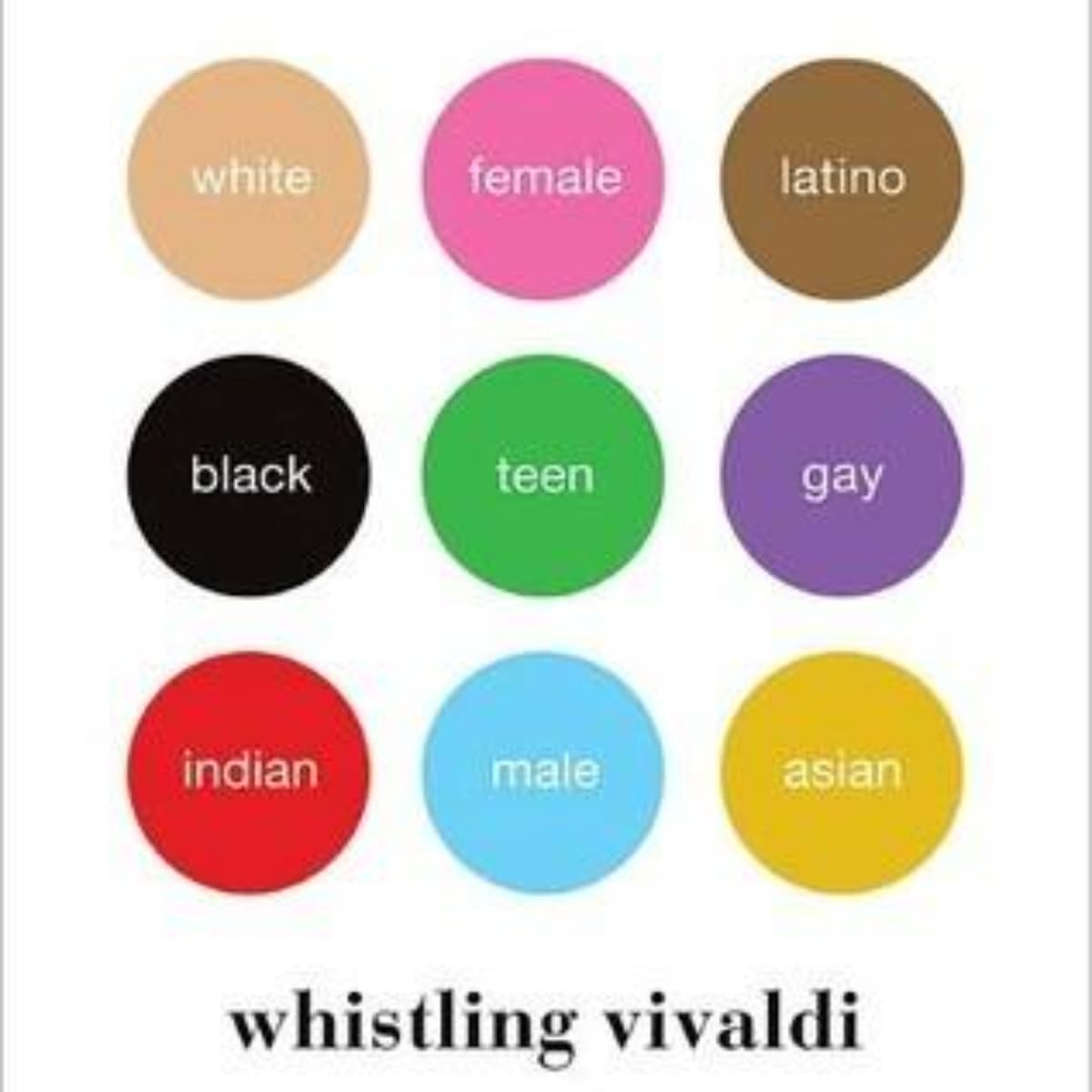
In “Whistling Vivaldi,” Claude M. Steele weaves a compelling narrative that reveals the complex interplay between identity and performance. Set against a backdrop of social and psychological experiments, Steele takes readers on a journey through the nuanced experiences of individuals navigating a world shaped by stereotypes. Through personal anecdotes and research findings, he illustrates how the fear of confirming negative stereotypes can hinder performance and stifle potential. For instance, a Black student might struggle with anxiety in academic settings, fearing they’ll perpetuate a stereotype about their race. Yet, Steele introduces the concept of "whistling Vivaldi," a metaphor for the strategies individuals use to navigate these challenges—showing that embracing one’s multiple identities can lead to resilience and success. Ultimately, the book challenges readers to reconsider the impact of societal expectations, advocating for an understanding that empowers rather than confines.
Chapter 1:What Is Whistling Vivaldi
"Whistling Vivaldi" by Claude M. Steele is a prominent work examining the interplay of identity, stereotype threat, and social dynamics, particularly in the context of race. Below is an evaluation of the book based on the specified criteria:
1. Depth and Accuracy of Content: Steele provides a deep dive into psychological research and personal anecdotes to illustrate how identity influences behavior and performance. His insights are grounded in empirical studies, making the content accurate and rigorous.
2. Originality: Steele's approach is distinguished by his focus on stereotype threat—a term he coined. He combines psychological theories with real-world implications, offering original perspectives on how societal perceptions affect individuals’ performance and self-concept.
3. Organization: The book is well-structured, with chapters that flow logically from one concept to the next. Each section builds upon the previous ones, helping the reader to understand the complexities of identity and stereotype threat effectively.
4. Readability: Steele writes in an accessible style, making complex psychological concepts understandable for a broad audience. His use of engaging anecdotes and clear language enhances the book's readability.
5. Inspirational Emotional Impact: The book resonates emotionally, especially with readers who have experienced the pressures of identity. Steele’s narrative inspires reflection on personal experiences and encourages understanding of broader societal issues.
6. Cultural and Social Impact: Steele addresses significant cultural and social issues, including racism and bias. His work contributes to ongoing discussions about diversity, equity, and inclusivity in various institutions, particularly education.
7. Attention to Detail: The book demonstrates careful attention to detail, with thorough explanations of research findings and thoughtful discussions of their implications on identity and performance.
8. Theme and Message: A central theme is the impact of societal stereotypes on individual potential. Steele's message emphasizes the importance of understanding these dynamics to foster environments where everyone can thrive.
9. Critical Thinking: Steele encourages readers to engage with the material critically, prompting questions about their own identities and experiences within societal structures. His insights challenge readers to reconsider how stereotypes influence interactions.
10. References: The book is well-researched, with ample references to studies and literature in psychology and sociology, bolstering its credibility and providing readers with avenues for further exploration.
11. Creativity and Artistry: Steele integrates narrative storytelling with academic analysis, showcasing creativity in how he presents psychological research. His use of personal stories alongside analytical content adds an artistic dimension that makes the material more relatable and impactful.
In summary, "Whistling Vivaldi" is a compelling and insightful work that adeptly explores complex themes surrounding identity and societal perception. It is well-received for its depth, organization, and emotional resonance, making it a valuable read for those interested in psychology, sociology, and cultural studies.
Chapter 2:Whistling Vivaldi chapters
"Whistling Vivaldi: And Other Clues to How Stereotypes Affect Us" by Claude M. Steele explores the concepts of stereotype threat and identity in various social contexts. Here’s a summary of the key chapters and themes in the book:
Introduction
Steele introduces his concept of stereotype threat—the risk of confirming negative stereotypes about one's social group. He discusses how this threat can impact performance and self-image among individuals, particularly in academic and professional settings.
Chapter 1: The Stereotype Threat
This chapter delves into the foundational idea of stereotype threat, showcasing empirical studies that demonstrate how being aware of a negative stereotype can hinder performance. Steele explains that this is not just confined to marginalized groups, but can affect anyone identified with a stereotype.
Chapter 2: Whistling Vivaldi
Here, Steele recounts an experience he had being a Black man in predominantly white spaces and how he consciously adjusted his behavior to counteract stereotypes—like "whistling Vivaldi" to signal cultural sophistication. This chapter illustrates the lengths individuals go to manage perceptions.
Chapter 3: Identifying the Threat
Steele examines the context in which stereotype threats can arise, such as in educational settings or workplaces. He discusses studies showing that merely reminding individuals of their group identity can activate stereotype threats.
Chapter 4: The Impact on Performance
This chapter provides evidence linking stereotype threat to decreased performance. Steele discusses studies about academic performance among minority students and athletes, analyzing how the fear of confirming a stereotype can prevent them from reaching their full potential.
Chapter 5: Coping Strategies
Steele discusses various coping strategies individuals employ to deal with stereotype threat, such as self-affirmation and shifting identity. He emphasizes the importance of cultivating an environment that minimizes stereotype threats, whether in education or beyond.
Chapter 6: The Role of Identity
In this chapter, Steele highlights how personal identity shapes experience in the face of stereotypes. He explores the complexity of identity and how individuals navigate multiple identities, especially when those identities intersect with various social contexts.
Chapter 7: Changing the Narrative
Steele suggests that systems can be put in place to alleviate the impacts of stereotype threat. He discusses interventions that have proven successful in educational settings and advocates for more conscious and inclusive practices to help marginalized groups succeed.
Conclusion
In the concluding chapter, Steele reaffirms the significance of understanding stereotype threat and its far-reaching implications on society. He calls for a collective effort to recognize and mitigate the effects of stereotypes, emphasizing the need for awareness and concrete action.
Overall Themes
1. Stereotype Threat: The central theme focusing on how stereotypes impact minority groups in various settings.
2. Identity: Examination of the complexities around identity and how individuals navigate multiple, sometimes conflicting identities.
3. Social Context: Understanding that the social environment plays a critical role in the experience of stereotypes.
4. Coping Mechanisms: Strategies that individuals employ to counteract the negative effects of stereotypes.
"Whistling Vivaldi" provides valuable insights into the psychological mechanisms behind stereotypes and their real-world consequences, urging readers to foster inclusive environments that recognize and celebrate diversity.
Title: The Echoes of Identity: Whistling Vivaldi in a Changing World
Once upon a time in a bustling academic realm, a renowned scholar named Dr. Claude Steele embarked on a journey—a journey not just through the annals of academic discourse, but into the very heart of human experience. In his landmark book, "Whistling Vivaldi," Steele illuminated a pivotal theme: the intricacies of identity and the profound impact of stereotype threat on individuals from marginalized groups.
Imagine a young Black man named Malik, vibrant with dreams of becoming an accomplished scientist. Every day, he walks through the hallowed halls of a prestigious university, where the air is thick with intellect and expectation. As he strides confidently to class, he hears the whispers of fear trailing behind him—whispers borne not from his own thoughts, but from the eyes of those who see a student of color, and subconsciously question his competence.
You see, Steele’s research reveals an unsettling truth. This phenomenon, where individuals feel the weight of negative stereotypes pressing upon them, distracts from their performance and blocks their path to success. For Malik, every moment is a test—not just of knowledge, but of identity. He grapples with the haunting fear that his every misstep will reinforce the stereotype that he is less capable than his peers.
But as Malik continues his journey, he finds solace in an unexpected and beautiful way: he begins to whistle Vivaldi. In the soft notes of the Four Seasons, he finds a refuge. Each melody serves as a reminder of his passion, his individuality, and his love for science. Steele argues that in moments of intense pressure, embracing one’s positive identity can shield against the weight of stereotype threat. For Malik, whistling Vivaldi becomes a form of defiance—a rebellion against the labels society has placed upon him.
In the book, Steele shares the anecdotes of various individuals navigating their own battles with identity. There is a girl named Samira, a Muslim student who feels the eyes of her classmates upon her when she enters the classroom after a global incident. There’s Gerard, an older white man who returns to college, feeling the sting of ageism among his younger peers. Each of these individuals grapples with their own unique stereotype threat, yet they all yearn for the same outcome: to be seen for who they truly are, beyond the labels they inherit.
As Malik and his peers navigate the swirling tides of stereotype, Steele also introduces the concept of “identity safety.” This is where institutions can foster an environment that validates diverse identities while dismantling harmful stereotypes. Malik’s university, under new leadership inspired by these principles, begins to implement mentorship programs that celebrate diversity in science. Slowly but surely, students from all backgrounds begin to feel a shared sense of belonging, which in turn allows their true talents to shine.
The journey of identity is not a solitary path, but a collective experience. Steele’s exploration urges us to realize that the threads of identity are woven together through shared struggles and triumphs. As Malik speaks up in class, sharing his insights without fear, the symphony of voices grows richer and more harmonious. Through whistling Vivaldi, he discovers a powerful truth: our identities are multifaceted, and it is through embracing all of who we are that we can dismantle the barriers placed before us.
Ultimately, "Whistling Vivaldi" teaches us that while the world may sometimes echo with the sounds of doubt and stereotype, there is profound strength in resilience and identity expression. Steele’s revelations remind us to create spaces where everyone can pass through the halls of knowledge and opportunity unencumbered, allowing the music of diversity to play freely—a melody that celebrates the fullness of humanity.
And so, in our own lives, as we face the challenges of identity and perception, let us all take a moment to whistle a tune that resonates with our true selves—a tune that shatters stereotypes and paves the way for a future where we no longer walk alone but create a harmonious chorus of acceptance and understanding. After all, every note counts in the symphony of life.

Book Summary Audio Bookey https://www.bookey.app/audiobook/whistling-vivaldi
Quotes https://www.bookey.app/book/whistling-vivaldi/quote
YouTube https://www.youtube.com/watch?v=-YbE3ljT3t4
Amazon https://www.amazon.com/Whistling-Vivaldi-Stereotypes-Affect-Issues/dp/0393339726
Goodreads https://www.goodreads.com/book/show/6649312-whistling-vivaldi