
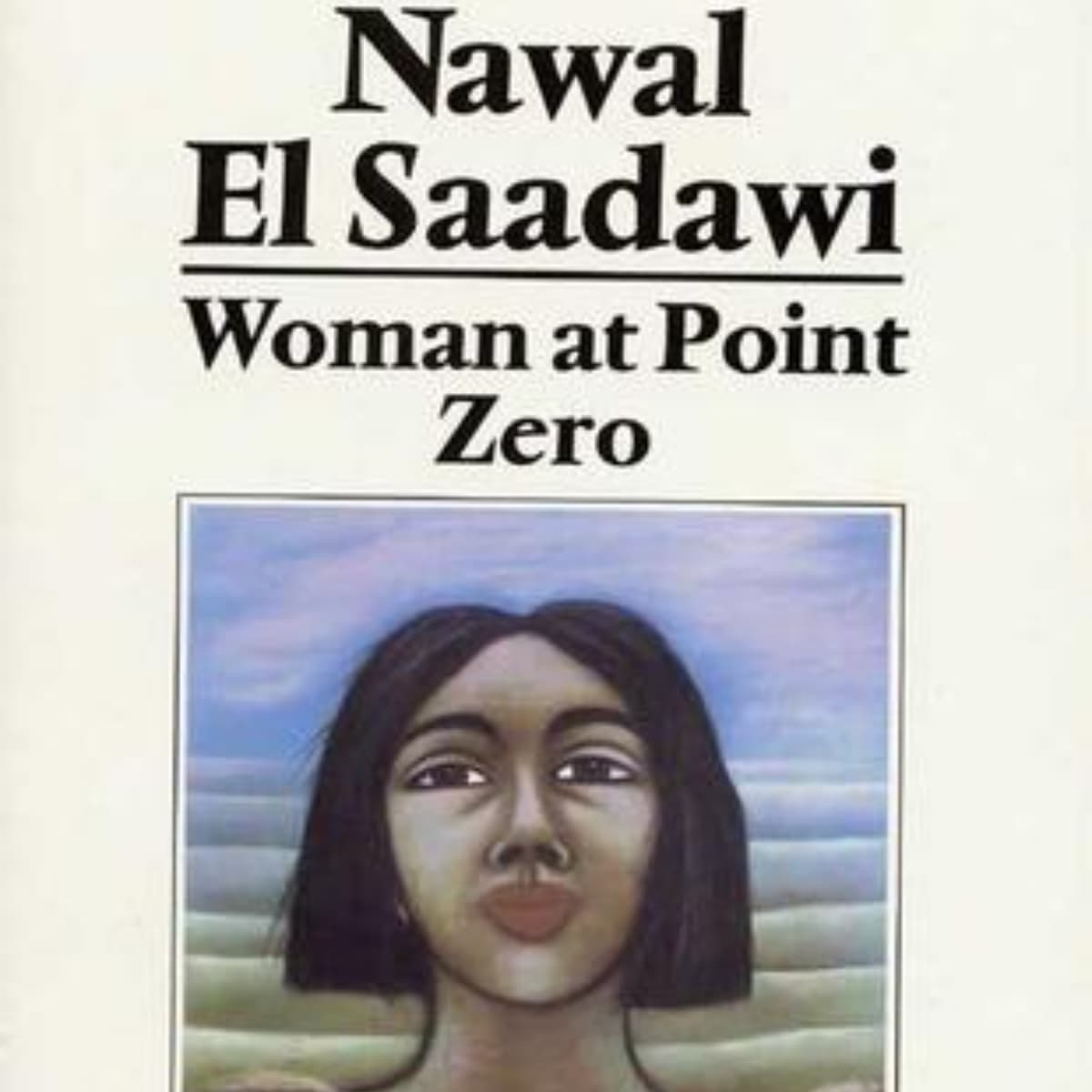
In Nawal El Saadawi's powerful novella, "Woman at Point Zero," we journey into the heart of Firdaus, a woman imprisoned for killing her pimp. Through her poignant story, we confront the relentless struggles faced by women in patriarchal societies. Firdaus's life is a haunting reflection of oppression—her aspirations crushed beneath the weight of societal expectations and male dominance. Yet, her defiance ignites a spark of empowerment as she navigates a world that continually seeks to belittle her. The theme of female autonomy resonates deeply, challenging readers to reflect on the systemic injustices that persist today. As Firdaus ultimately claims her agency, her tragic fate becomes a rallying cry against the chains of oppression that bind countless women worldwide. In this gripping tale, El Saadawi not only tells a story of despair but also evokes a fierce call for liberation and self-determination that echoes across generations.
Chapter 1:What Is Woman at Point Zero
"Woman at Point Zero" is a powerful novel by Egyptian author Nawal El Saadawi, first published in 1975. It tells the story of Firdaus, a woman on death row in an Egyptian prison, as she recounts her life experiences in a patriarchal society that has oppressed her at every turn. The book is both a narrative of personal struggle and a critique of the societal structures that perpetuate gender inequality and violence.
Depth and Accuracy of Content
The novel effectively explores the harsh realities faced by women in Egyptian society. El Saadawi, drawing from her experiences as a feminist and activist, provides a nuanced and accurate depiction of systemic oppression, making the content deeply resonant.
Originality
The narrative structure and the blending of autobiography with fiction present a unique perspective on women's lives in a male-dominated society. El Saadawi's approach is original, as it combines personal and social commentary, stepping away from traditional storytelling.
Organization
The narrative is well-organized, moving fluidly between Firdaus's past and present. The chronological unfolding of her life allows readers to grasp the evolution of her struggles and responses to her circumstances.
Readability
While the book addresses complex themes, its language is accessible, making it suitable for a wide audience. The prose is straightforward yet impactful, enhancing the readability of the story.
Inspirational Emotional Impact
"Woman at Point Zero" is highly inspirational, evoking a deep emotional response in readers. Firdaus’s journey reflects resilience and defiance against systemic oppression, inspiring many to confront gender-based violence and injustice.
Cultural and Social Impact
The novel has had a significant cultural and social impact, particularly in feminist discourse. It raises awareness of women's rights and the societal issues that affect them globally, transcending cultural boundaries.
Attention to Detail
El Saadawi pays meticulous attention to details, vividly illustrating the socio-economic and political context of Firdaus’s life. Her descriptions enhance the readers' understanding of the character's environment and emotional state.
Theme and Message
The central themes of gender oppression, social injustice, and personal agency are powerfully conveyed. The message underscores the struggle for women's rights and critiques the mechanisms of patriarchal control.
Critical Thinking
The novel encourages critical thinking about societal structures, prompting readers to reflect on gender dynamics, personal agency, and societal change. It challenges readers to question their beliefs about power and oppression.
References
While the novel is fictional, it is deeply grounded in reality, drawing on El Saadawi’s experiences and observations, enriching its credibility and relatability.
Creativity and Artistry
El Saadawi’s lyrical writing style and imaginative storytelling reflect her artistic prowess. The creative choice of perspective and voice adds depth and intensity to Firdaus's narrative.
In summary, "Woman at Point Zero" is an impactful work that excels in depth, originality, and emotional engagement. Its themes resonate broadly, making it a significant contribution to literature on women's rights and social justice.

Chapter 2:Woman at Point Zero chapters
"Woman at Point Zero" by Nawal El Saadawi is a powerful novella that delves into the life of Firdaus, a woman imprisoned for murder, as she reflects on her life and the societal forces that have shaped her existence. Below is a summary of key chapters or segments of the book:
Chapter 1: Introduction to Firdaus
The story begins with the narrator, a feminist psychiatrist, meeting Firdaus in a women's prison. Firdaus is on death row for murdering a man. The narrator is intrigued by her story and wants to understand the experiences that led to her current situation.
Chapter 2: Firdaus's Childhood
Firdaus recalls her early life, growing up in a rural area of Egypt. She describes her family dynamics, particularly her father's abusive behavior towards her mother. After her father’s death, Firdaus's life becomes more difficult, especially with the oppressive societal expectations placed on women.
Chapter 3: Education and Awakening
Firdaus's intelligence and desire for education lead her to move to the city to attend school. She learns to read and write, igniting a desire for independence. However, she faces harassment and betrayal that challenge her newfound hopes.
Chapter 4: Marriage and Betrayal
Firdaus is forced into marriage with a man who abuses her, highlighting the societal norms that dictate women's lives. This marriage serves as a turning point, as Firdaus begins to recognize her oppression.
Chapter 5: Experiencing Sex Work
After escaping her marriage, Firdaus tries her hand at various jobs but ultimately turns to prostitution as a means of survival. This chapter explores themes of autonomy and exploitation, illustrating her struggles between agency and victimhood.
Chapter 6: Relationships with Men
Throughout her time as a sex worker, Firdaus has various encounters with men, some exploitative and others offering a semblance of connection. Her experiences deepen her understanding of male power dynamics and the ways in which women are objectified.
Chapter 7: A Moment of Clarity
Firdaus begins to confront the realities of her life and the systemic oppression of women. This self-awareness leads her to make significant choices about her future, including her decision to murder the man who claims to love her, which she sees as an act of defiance.
Chapter 8: Reflection and Regret
As Firdaus awaits her execution, she reflects on her life choices and the societal constraints that led her to this point. Her reflections underscore the book's themes of gender, power, and resistance.
Chapter 9: The Conclusion
In her final moments, Firdaus embodies both empowerment and tragedy, challenging the reader to consider the societal conditions that contribute to women's suffering. Her story ends on a poignant note, leaving readers to contemplate the implications of her life and choices.
Themes
The novella explores themes such as the oppression of women, the struggle for autonomy, the impact of societal norms, and the intersection of personal and political narratives. Firdaus’s story serves as a critique of patriarchal structures and an affirmation of the resilience of women.
This summary provides an overview of the main chapters and themes of "Woman at Point Zero." The novella is both a poignant character study and a broader commentary on women's rights and societal injustices.
In a world where the whispers of women often drown beneath the clamor of societal expectations, Nawal El Saadawi's "Woman at Point Zero" emerges as a powerful beacon of resilience and defiance. The novel, based on the true story of Firdaus—a woman condemned to death for killing her abusive pimp—serves as both a gripping narrative and a poignant exploration of gender, power, and the quest for identity.
As the sun sets over Cairo, a prison cell holds the last vestiges of hope for Firdaus. This is not merely a tale of a woman on the brink of execution; it’s a reflection on the multiple layers of oppression women face in a patriarchal society. Through Firdaus’ story, we navigate the treacherous waters of female subjugation and the fierce yearning for autonomy.
Picture a young Firdaus, born into a world that seeks to define her by the men in her life. From a tender age, she endures the harshness of reality—a father who neglects her, a husband who betrays her trust, and a society that reduces her worth to mere objectification. Each encounter sharpens her awareness of the brutal confines of her existence, laying the groundwork for her transformation from victimhood to a fierce claim of her own narrative.
What El Saadawi captures beautifully is the theme of resistance. Around Firdaus, the architecture of oppression looms large, but it's in her rebellion that the narrative truly ignites. Her quest is not just for survival but for a form of self-actualization that society vehemently denies her. With each decision she makes—from rejecting an abusive marriage to engaging in sex work—Firdaus intricately weaves the story of a woman carving out her own space in a world that refuses to acknowledge her agency.
The theme of womanhood becomes a vibrant tapestry of strength and fragility. Firdaus embodies the struggles many face: the constant balancing act between societal approval and personal desires. She becomes acutely aware that the freedoms she yearns for often come at a steep price. The journey towards self-ownership is laden with moments of violence and vulnerability, depicting the stark reality that freedom often remains an elusive dream for many women.
El Saadawi also delves into the complexities of female relationships. Firdaus’ interactions with other women reveal a nuanced dynamic—a mix of solidarity and competition, nurturing and envy. Through these characters, the novel echoes a critical reminder that while the struggle for liberation is collective, it is also marred by the societal structures that pit women against each other.
As Firdaus' story unfolds towards its tragic climax, readers are left grappling with unsettling questions: What is justice? What does it mean to truly be free? Is it possible for a woman to reclaim her narrative in a world so intent on silencing her? By the time we reach the poignant conclusion, there’s a haunting recognition of the systemic powers that shape our lives and the choices we make.
"Woman at Point Zero" is more than just the story of one woman; it’s an urgent call to reflect on the societal norms that bind women to oppressive narratives. El Saadawi challenges us to listen, to understand the struggles inscribed in the bodies of women across the globe, and to recognize that true empowerment comes from both individual and collective defiance against societal constraints.
In the echoes of Firdaus’ brave voice, we discover a universal truth: the fight for autonomy, dignity, and self-worth is an endless journey—a journey that continues to resonate long after the last page is turned. Through storytelling, Nawal El Saadawi illuminates the dark corners of womanhood, proving that even at the bleakest point, the spark of resistance can ignite a fire of change.

Book Summary Audio Bookey https://www.bookey.app/audiobook/woman-at-point-zero
Quotes https://www.bookey.app/book/woman-at-point-zero/quote
YouTube https://study.com/academy/lesson/video/woman-at-point-zero-summary-analysis-quotes.html
Amazon https://www.amazon.com/Woman-Point-Zero-Nawal-Saadawi/dp/1842778730
Goodreads https://www.goodreads.com/book/show/159604.Woman_at_Point_Zero